THE ESSENTIAL
To become an HVAC technician, you usually need technical training, supervised field experience, EPA Section 608 certification, and any license required where you work.
- Training: A trade school, community college, apprenticeship, or employer program can teach heating, ventilation, and air conditioning fundamentals.
- Certification: You need EPA Section 608 certification before servicing equipment containing regulated refrigerants.
- Time: A full-time certificate program may take about 6 to 12 months, while an apprenticeship commonly takes several years.
- Pay: The U.S. Bureau of Labor Statistics reported a $57,300 median annual wage for heating, air conditioning, and refrigeration mechanics and installers in 2023.
Your exact route depends on state licensing rules, the type of systems you want to service, and whether you start through school or paid work.
What Does an HVAC Technician Do?
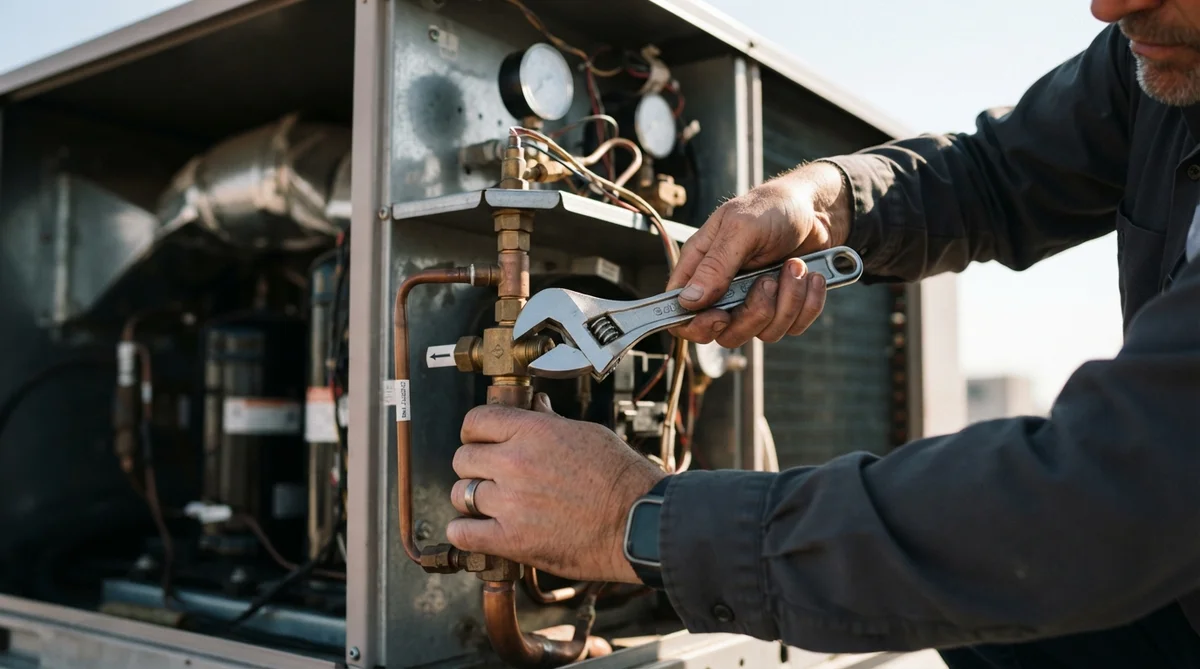
An HVAC technician installs, tests, maintains, and repairs equipment that controls indoor temperature, air movement, and humidity. The work can involve furnaces, central air conditioners, heat pumps, boilers, rooftop units, refrigeration equipment, and building controls.
You may work in homes, offices, schools, hospitals, factories, retail buildings, or construction sites. Residential technicians often travel between service calls, while commercial technicians may work on larger systems and follow scheduled maintenance plans.
Typical Responsibilities and Work Settings
- Inspect equipment and identify problems using electrical meters, gauges, temperature readings, and manufacturer instructions.
- Install ductwork, thermostats, condensers, furnaces, air handlers, heat pumps, and ventilation components.
- Clean coils, replace filters, tighten electrical connections, test safety controls, and complete preventive maintenance.
- Recover, recycle, or add refrigerant according to federal rules and use approved leak-checking procedures.
- Explain repair options, document completed work, and follow workplace safety procedures around electricity, combustion, pressurized systems, and heights.
What Are the HVAC Technician Requirements?
Most employers look for a high school credential, mechanical interest, basic mathematics, safe work habits, and evidence that you can diagnose equipment methodically. Some entry-level jobs accept trainees, but formal training and certification can make your application stronger.
What Education, Technical Skills, and Physical Requirements Do You Need?
- Education: A high school diploma or equivalent is commonly preferred. Algebra, physics, shop, computer, and electrical classes can help.
- Technical skills: You should learn electrical circuits, airflow, refrigeration cycles, combustion, pressure-temperature relationships, soldering, brazing, and digital controls.
- Physical ability: The job may require lifting equipment, climbing ladders, kneeling, working in tight spaces, and standing or walking for long periods.
- Work habits: You need clear communication, accurate documentation, punctuality, and the willingness to work in hot, cold, noisy, or dirty conditions.
Training programs differ in quality, so check instructor qualifications, lab hours, completion rates, employer relationships, and accreditation before enrolling. Campus Compass explains what accreditation means in higher education, although you should also confirm whether a particular trade program is recognized by relevant industry bodies.
How to Become an HVAC Technician: What Are the Steps?
Step 1: Earn a High School Diploma or Equivalent
Start with a high school diploma, General Educational Development (GED) credential, or equivalent qualification if your chosen employer or school requires one. If you are still in school, prioritize algebra, applied science, computer skills, and hands-on technical courses.
Some employers also require a valid driver’s license because service technicians commonly travel with tools and parts. Check this requirement before applying for residential service roles.
Step 2: Complete HVAC Training
Choose training that includes both classroom instruction and practical lab work. A useful curriculum covers electrical diagnosis, refrigeration, heating systems, ventilation, tools, safety, customer communication, and reading technical diagrams.
Programs vary from short introductory courses to certificates lasting about 6 to 12 months. Before paying a deposit, ask for the total tuition, tool costs, exam fees, refund policy, class schedule, and job-placement claims in writing. If you need help comparing education expenses and aid questions, review this guide to how a financial aid office works.
Step 3: Gain Hands-On Experience Through an Apprenticeship or Entry-Level Job
Apply for helper, installer, maintenance trainee, or apprentice positions while studying or after graduation. Supervised work teaches you how to diagnose real equipment, communicate with customers, manage parts, and follow local codes.
Ask each employer whether training hours count toward a state license or apprenticeship completion. Keep copies of pay records, job duties, course certificates, and supervisor sign-offs because some licensing agencies require documented experience.
Step 4: Earn EPA Section 608 Certification
Take an EPA-approved Section 608 examination if your work will involve regulated refrigerants. The credential is required for technicians who service, repair, maintain, or dispose of equipment that could release those refrigerants.
Choose the credential that matches your planned work. Universal certification covers the main appliance categories and can reduce the need to take additional exams later, but you should confirm the exam provider’s current requirements before registering.
Step 5: Meet State and Local Licensing Requirements
Licensing rules differ across the United States, and some cities or counties add permits, registration, or competency requirements. Check the state contractor board, labor department, or local building authority before accepting independent work.
- Confirm whether you need an individual technician registration, contractor license, or both.
- Check minimum age, education, supervised experience, examination, insurance, and background-check requirements.
- Ask whether refrigerant certification, continuing education, or renewal fees apply.
- Verify whether the rules change when you work on commercial equipment, refrigeration, boilers, or projects above a stated contract value.
For example, the California Contractors State License Board states that its C-20 license covers warm-air heating, ventilation, and air-conditioning contracting. The Brownson Technical School guide lists California requirements including being at least 18, passing the C-20 examination, documenting education or experience, and providing a contractor bond, but fees and rules should be rechecked with the board in June 2026.
Step 6: Apply for HVAC Technician Jobs and Continue Learning
Build a resume that lists equipment types, lab projects, supervised hours, EPA certification, safety training, and any manufacturer courses. Entry-level job titles include HVAC helper, installation trainee, maintenance technician, refrigeration apprentice, and service technician.
After you gain experience, consider advanced study in controls, commercial refrigeration, heat pumps, energy efficiency, or building automation. Manufacturers regularly update equipment, refrigerants, software, and diagnostic procedures, so continuing education remains part of the job.
Which HVAC Training Option Should You Choose?
| Option | Typical length | Best for | Main advantage | Watch for |
|---|---|---|---|---|
| Trade school certificate | 6 to 12 months | Fast entry into the field | Structured labs and exam preparation | Tuition and tool costs |
| Community college | About 1 to 2 years | Broader technical education | General education and certificate options | Longer schedule |
| Apprenticeship | Often 3 to 5 years | Paid, supervised learning | Earn income while building experience | Competitive openings and work hours |
| Employer training | Varies | People hired as helpers | Direct workplace experience | Training depth depends on the employer |
Which HVAC Certifications and Licenses May You Need?
What Is EPA Section 608 Certification?
EPA Section 608 certification proves that you understand safe refrigerant handling and cannot expire under the federal program, although employers or local authorities may still require updated training. The U.S. Environmental Protection Agency divides the exam into these categories:
- Type I: Small appliances.
- Type II: High-pressure appliances, including many residential air-conditioning systems.
- Type III: Low-pressure appliances, such as some chillers.
- Universal: Types I, II, and III together.
Never vent refrigerant or open a pressurized system without the required certification, recovery equipment, and safety training. If you encounter an unknown refrigerant, damaged cylinder, electrical fire risk, or suspected gas leak, stop work and contact a qualified supervisor or emergency service.
What Are NATE and Other Industry Certifications?
- North American Technician Excellence (NATE): A voluntary industry certification that can demonstrate knowledge in areas such as air conditioning, heat pumps, gas heating, and senior-level service.
- HVAC Excellence: Offers exams and credentials covering technical subjects, electrical systems, and employment readiness.
- Manufacturer training: Helps technicians work on specific brands, controls, variable-speed systems, and newer heat-pump technology.
- Building automation training: Supports work with digital controls and connected commercial systems.
These credentials do not automatically replace a state license. Confirm which certification an employer or licensing agency accepts before paying for an exam.
When Do You Need a State HVAC Technician or Contractor License?
You may need a license when you contract directly with customers, supervise projects, perform work above a financial threshold, or work on regulated systems. Some states license contractors rather than individual technicians, while others require local credentials for specific tasks.
Use your state licensing agency as the final authority because requirements, fees, bonds, renewal dates, and experience rules can change. Do not advertise independent contracting until you have checked the current rule for your location.
Do You Need an HVAC Apprenticeship?
You do not always need an apprenticeship, but it is one of the strongest ways to gain paid experience under qualified supervision. It can also help you meet documented work-hour requirements for a future license.
A trade school can provide faster access to lab practice, while an apprenticeship gives you daily exposure to customer calls, job sites, tools, and production standards. Compare the wage, schedule, tuition, benefits, credential outcome, and number of supervised hours before choosing.
How Long Does It Take to Become an HVAC Technician?
You can become employable in roughly 6 to 12 months through a full-time certificate, followed by entry-level work and required certification. Reaching independent technician or contractor status may take several years when a state requires documented experience.
The timeline is shorter if you already have electrical or mechanical experience and longer if you attend part time. Licensing offices and employers set different standards, so confirm the required hours before planning your departure from another job.
How Much Does HVAC Training and Certification Cost?
HVAC training costs vary widely by school, location, program length, equipment access, and whether the course includes exam preparation. Request a written June 2026 quote that separates tuition from books, tools, protective clothing, transportation, certification exams, and licensing fees.
Apprenticeships may reduce your upfront education cost because you earn wages while training, although starting pay can be lower than an experienced technician’s rate. A short course may cost less than a certificate but provide fewer lab hours and less employer support.
For a location-specific example, the Brownson guide published in 2025 listed a California contractor-license application fee of $330 and license fee of $180 at that time. Treat those figures as historical reference, not a 2026 quote, and confirm current charges with the California Contractors State License Board.
What Are HVAC Technician Salary and Career Outlook?
The U.S. Bureau of Labor Statistics reported a $57,300 median annual wage for heating, air conditioning, and refrigeration mechanics and installers in 2023, the latest figure cited in the supplied career data. Pay varies by region, overtime, union status, specialty, experience, and whether you work in residential service or commercial refrigeration.
The same Bureau of Labor Statistics outlook projected 9% employment growth from 2023 to 2033. The California Employment Development Department projected 13.8% growth for the state occupation from 2020 to 2030, based on its published projection period. Check both agencies for updates before using these figures in a personal career or relocation decision.
What Are the Most Common Questions About Becoming an HVAC Technician?
Can You Become an HVAC Technician Without Going to College?
Yes. You can enter through a trade school, apprenticeship, employer training program, or entry-level helper job rather than a four-year college degree. You still need the technical skills, supervised experience, EPA Section 608 certification, and any state or local license that applies to your duties.
Do HVAC Technicians Need a License in Every State?
No. States use different systems, and some local governments regulate work even when the state does not issue an individual technician license. Check the relevant state board and local building authority before working independently or signing a contract.
Is HVAC a Good Career?
HVAC can suit you if you enjoy practical troubleshooting, can work safely in uncomfortable conditions, and want a career that does not require a traditional four-year degree. The strongest fit depends on your tolerance for travel, physical work, seasonal demand, customer service, and ongoing technical training.